What Is Gravel Running? A Beginner's Guide to Running Off the Beaten Track
Off the road, into the landscape. Here's what gravel running actually is, why it's growing fast, and how to take your first steps on the tracks of Royal Deeside.
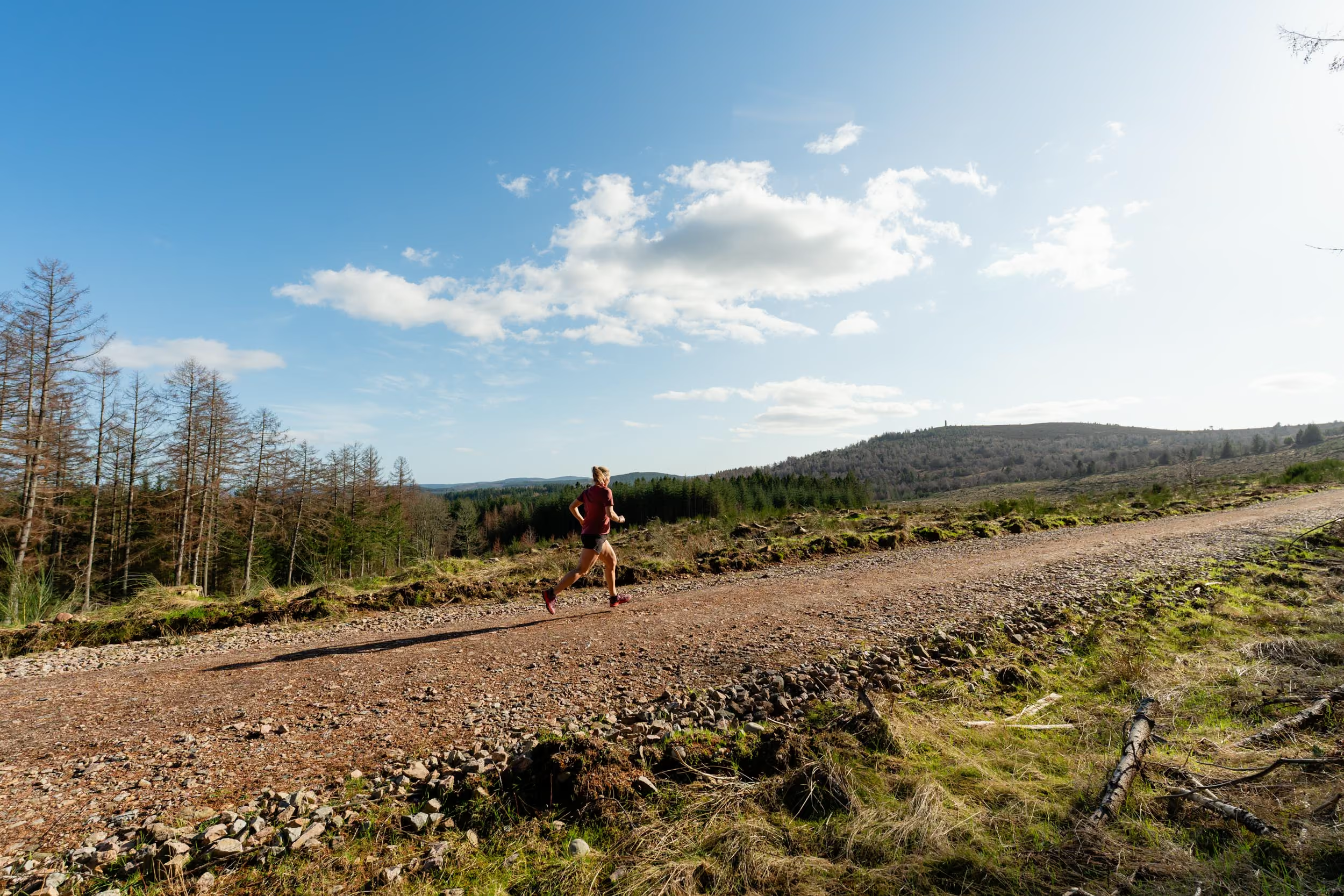
Gravel running is exactly what it sounds like, and also more than that. In short: gravel running is off-road running on unsealed surfaces — gravel tracks, forest roads, farm lanes and quiet backroads — that sit somewhere between smooth tarmac and rough mountain trail. It's running with the city behind you and the landscape opening up ahead.
If you've heard the term and weren't quite sure where it fit, you're in good company. Gravel running has grown fast, borrowing its name and its spirit from gravel cycling. Here's everything you need to know to understand it — and to give it a go.
So, what actually counts as gravel running?
Picture the surfaces you'd find on a forest track or an old estate road. Compacted stone. Hard-packed dirt. The kind of doubletrack a Land Rover could drive down. That's the heartland of gravel running.
It's defined less by a strict rulebook and more by a feeling: you're off the road, but you're not scrambling over boulders or wading through bog. The ground is runnable. The route flows. You can settle into a rhythm and actually look up at where you are.
That middle ground is the whole appeal. You get the escape of the trails without the technical demands of full-on fell or mountain running.
Gravel running vs trail running vs road running
The lines blur, but here's a simple way to think about it.
Road running is fast, predictable and hard on the joints. Tarmac, pavements, measured miles. Great for speed and structure, less so for scenery.
Trail running covers everything from gentle woodland paths to steep, rocky, root-strewn mountain routes. It can get genuinely technical — you're watching every footfall.
Gravel running sits between the two. Firmer and more flowing than a technical trail, softer and more interesting than the road. You can hold a steady pace, but you're surrounded by forest tracks and quiet backroads instead of traffic.
If road running is about the clock and trail running is about the terrain, gravel running is about the journey — covering ground through big landscapes, comfortably, for longer.
Why gravel running is having a moment
Gravel exploded in cycling first. Riders wanted to get off busy roads, away from cars, and into the countryside without needing a full mountain bike. Running has followed the same instinct.
A few reasons it's caught on:
- It's kinder on the body. Softer surfaces mean less repetitive impact than pounding tarmac, so many runners find they can train more, and recover faster.
- It's an escape. No traffic, no junctions, no stopping at lights. Just open track and air.
- It's welcoming. You don't need mountain-running skills or nerves of steel. If you can run on a path, you can run on gravel.
- The scenery does the work. It's hard to stare at your watch when there's a river on one side and forest on the other.
What you need to get started
Not much, and that's part of the charm.
A decent pair of trail, gravel or off-road running shoes will serve you well — something with a bit more grip and protection than a road shoe, but you don't need aggressive lugs unless the ground gets really loose or muddy. Many gravel surfaces are firm enough that a sturdy road shoe will cope on a dry day.
Beyond that: layers you can adjust as the weather turns, a way to carry water on longer outings, and a rough idea of your route. Scotland's weather likes to keep you honest, so a packable waterproof rarely goes amiss.
That's it. No technical kit, no barrier to entry. Lace up and go.
How to start gravel running
If you already run, the transition is easy. Find a forest track, a canal towpath, an estate road or a stretch of doubletrack near you, and run it the way you'd run anything else.
A few pointers for your first few outings:
- Slow down at first. Uneven ground asks a little more of your stabilising muscles. Your pace will naturally drop — let it.
- Shorten your stride. Quicker, lighter steps handle loose surfaces better than long reaching ones.
- Pick your line. Like a cyclist, you'll start spotting the smoothest path through the gravel. It becomes second nature.
- Build distance gradually. Gravel rewards endurance. Once you're comfortable, it's a brilliant surface for going long.
Then it's just a matter of stringing tracks together and seeing how far the landscape will take you.
Where to run gravel in Scotland
Royal Deeside, on the edge of the Cairngorms National Park, might be one of the best places in the country to do it. Forest tracks, riverside paths, quiet backroads winding through big Scottish landscapes — it's gravel running terrain by design.
It's also home to explorr, Scotland's outdoor endurance festival, taking place 28–30 August 2026 in Banchory. Alongside the Gravel Cycling Stage Race and a packed Festival Village, explorr puts on gravel running events across 5km, 10km, half-marathon and marathon distances — so whether you're trying off-road running for the first time or chasing a long-distance goal, there's a challenge with your name on it.
Same landscape. Four distances. Choose your challenge.
The 5km and the marathon line up side by side, and everyone finishes back at the Festival Village — live music, street food, cold pints served with river air and post-race stories.
That's gravel running. Off the road, into the landscape, and somewhere worth ending up.
Curious to run gravel in Royal Deeside? Explore the running events at explorr 2026 and pick your distance at explorr.co.uk.